
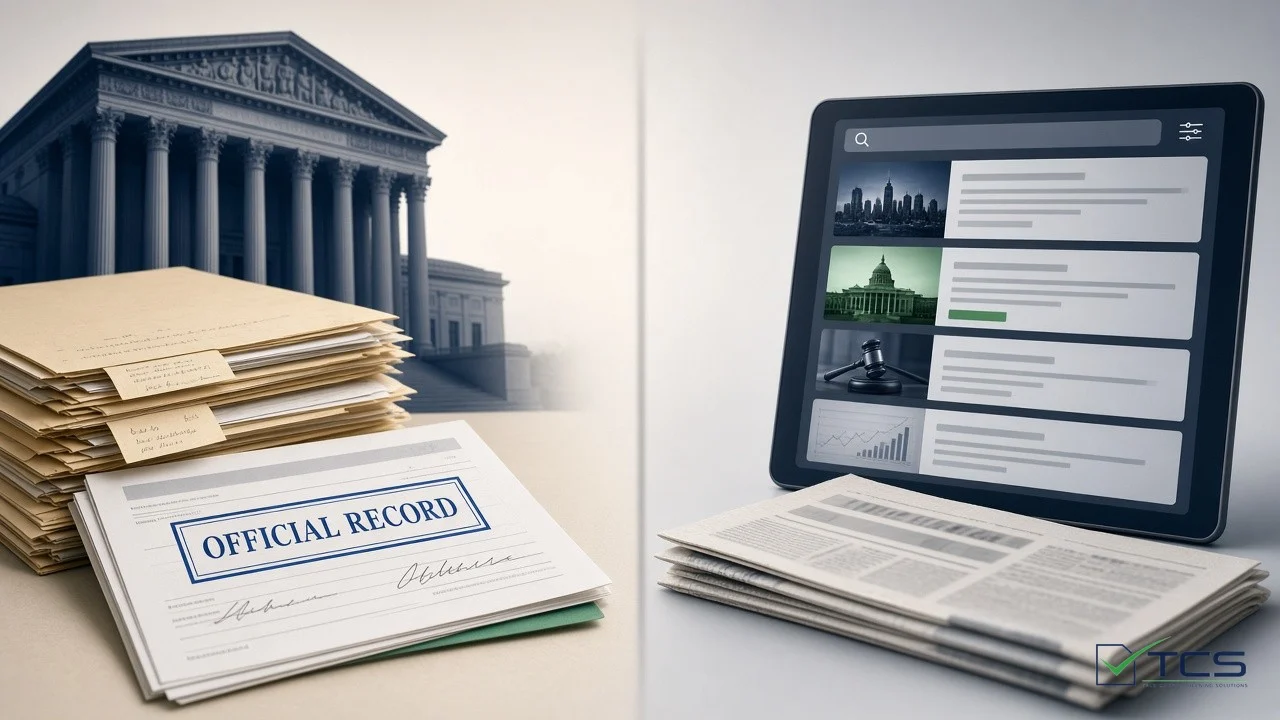
Public records and adverse media are often grouped together in due diligence, but they answer different questions.
Public records help confirm what has been filed, recorded, or adjudicated through official channels. Adverse media can surface reputational concerns, regulatory attention, or alleged misconduct that may never appear in a court docket or business filing.
For PE firms, counsel, and teams evaluating vendors or counterparties, the goal is not to choose one over the other. It is to know when each matters—and how to interpret findings without overreacting to weak signals.
What Public Records Cover
Public records come from courts, agencies, and other official sources. In business or executive diligence, they often include:
- Entity formation and status records
- Civil litigation history
- Bankruptcy filings
- Judgments, liens, and UCC filings
- Public regulatory actions
- Sanctions and watchlist designations
These records are valuable because they are usually verifiable. They help answer: Is this the right entity? Is there repeated litigation? Are there liens, judgments, or financial pressure signals? Does a party appear on a restricted list?
What Adverse Media Covers
Adverse media looks beyond official filings—news reports, public articles, and other coverage that may indicate reputational or business risk. That can include fraud allegations, regulatory scrutiny, consumer harm, governance controversies, or pattern complaints.
This matters because not every meaningful risk shows up immediately in a court database. Some issues appear first in the press. Others never become formal litigation, but still affect reputation or deal risk.
A news article is not a court finding, though. Coverage can be incomplete, outdated, contested, or tied to the wrong person or company. Identity resolution and context are essential.
When Public Records Matter Most
Lean on public records when the decision depends on formal, verifiable history:
- You need confirmation, not rumor
- Legal or financial exposure is the core concern
- Compliance requires official-source screening
- You need a defensible review file for an IC, counsel, or compliance team
Public records alone can miss reputational issues or emerging controversies that have not yet produced filings.
When Adverse Media Matters Most
Lean on adverse media when reputation, patterns, or early warning signals matter:
- Filing history is thin, but risk may still exist
- You need to understand how a company or executive is publicly perceived
- Related parties and prior ventures may not be obvious from one entity search
- Issues may be developing before they hit a docket
Adverse media is a weak standalone decision tool. Without verification, it can create false positives or overstate weak claims.
Use Both—Then Apply Judgment
The strongest reviews combine public records and adverse media, then interpret both carefully.
A clean litigation search does not mean there is no reputational concern. A dramatic headline does not mean the claim is material or accurate. One old lawsuit usually matters less than a pattern of similar disputes and related coverage. A sanctions hit only helps if it belongs to the correct party.
Good diligence is not the longest hit list. It is deciding which findings are relevant, current, correctly attributed, and material to the decision.
How True Court Screening Solutions Can Help
True Court Screening Solutions helps organizations evaluate companies, executives, vendors, and counterparties through source-verified public-record research and adverse media review.
Depending on scope, that may include entity verification, civil litigation research, bankruptcy and financial public records, judgments and liens, UCC filings, sanctions screening, adverse media research, and quality-reviewed reporting for practical decision-making.
Public records and adverse media answer different questions. Used together, they help teams move with evidence rather than assumption.